Around the Community: Top Things to Do in Gainesville, FL
Looking for things to do this weekend in Gainesville, FL? SmarterSpace Storage is proud to be part of this community, and we’ve put together a list of some of our favorite spots, attractions, and restaurants around the city. Whether you’re venturing out solo, moving to town, or looking for fun for the whole family, Gainesville is a vibrant community worth exploring. Check out our top places!See How Self Storage Supports an Organized Home
Table of Contents
Get Outside & Explore Gainesville’s Beauty
Get to Know the University of Florida
Admire Art & History Close to Home
Enjoy Restaurants in Gainesville, FL
Gainesville Neighborhoods: Where to Settle In
Settle into the Neighborhood with Self Storage
Our Guide to the Top Things to Do in Gainesville, FL
Gainesville, FL, is known for a lot of things, namely being home to the University of Florida and the birthplace of Tom Petty. But it is also so much more. You can see preserved Florida wildlife habitats, take on a lively college town scene, and try flavorful downtown dishes all in the same day. Search for your new favorite place!1. Get Outside
One way to see the nature of the area is through the 16-mile-long Gainesville-Hawthorne State Trail. This paved, historic rail-bed-turned-greenway is open daily from 8 a.m. to sunset and is free to use for hiking, biking, walking, running, and horseback riding on its adjacent grassy equestrian path. In addition to birdwatching and looking out for other wildlife, you can fish from bridges along the corridor as the trail winds through Paynes Prairie toward Hawthorne. Morningside Nature Center is another great place to learn about and explore Gainesville’s natural environment. This 416-acre city park features more than six miles of trails, a Living History Farm with barnyard animals, and wildflower displays, and it’s open to the public Monday through Saturday, free of charge.
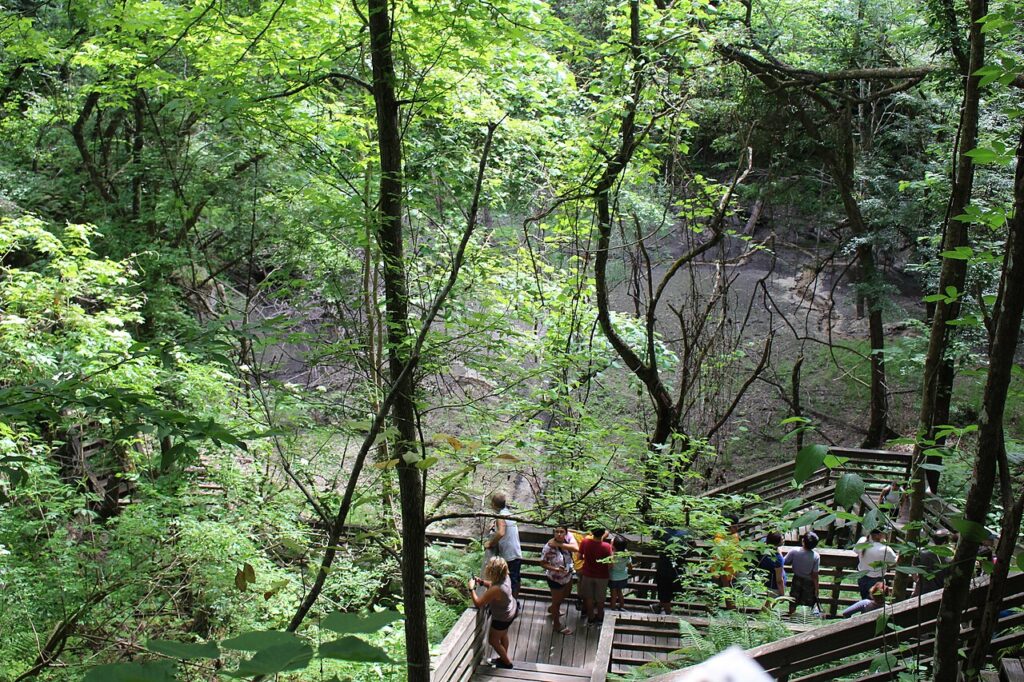
Interested in stepping back in time? Devil’s Millhopper Geological State Park is a unique geological wonder featuring a roughly 120-foot-deep sinkhole surrounded by lush vegetation. Visitors can descend a staircase into the sinkhole, observe the miniature rainforest ecosystem that has formed inside it, and learn about the area’s geology at the visitor center. If you travel south down Route 441, Paynes Prairie Preserve State Park is another expansive park nearby, covering more than 21,000 acres of wetlands, prairies, and forests. Enjoy hiking, birdwatching, or spotting wildlife such as wild horses, bison, and alligators from an overlook or trail. West of town, San Felasco Hammock Preserve State Park protects thousands of acres of hardwood forest, sinkholes, and limestone outcrops, with miles of trails for hiking, mountain biking, and horseback riding.
Parks with Playgrounds in Gainesville
Treat the littles to some fun in the sun at these parks that have playground equipment, climbing opportunities, and other kid-friendly spaces.- Depot Park – a downtown Gainesville park with a splash pad, playground, and boardwalk trails around a restored pond.
- San Felasco Hammock Preserve State Park – trails and natural play space for older kids who love the outdoors.
- Cofrin Nature Park – a half-mile, pet-friendly hiking trail through a former horse pasture, with a playground, tennis court, and covered pavilion, located near the Oaks Mall in west Gainesville.
3. Get to Know the University of Florida
You can’t talk about Gainesville without talking about the University of Florida. The institution traces its roots back to 1853, but the current Gainesville campus opened its doors in 1906 with just 102 students. Today, UF enrolls more than 60,000 students, making it one of the largest universities in the country, and its athletic teams, the Florida Gators, compete in the Southeastern Conference. The sprawling campus sits just south of downtown and shapes much of Gainesville’s culture, from game-day traditions to the steady stream of students, researchers, and visitors who fill the city’s restaurants, shops, and neighborhoods year-round.
Beyond academics and athletics, UF is home to several attractions that are open to the public and worth a visit whether or not you have a student in the family, including the Florida Museum of Natural History, the Harn Museum of Art, and the UF Bat Houses, all detailed below.
4. Admire Art & History
The Florida Museum of Natural History is a free attraction on the UF campus that has long kept visitors of all ages entertained with fossil exhibits and its Butterfly Rainforest, a living exhibit featuring butterflies, birds, and koi from around the world. Please note that the museum’s main exhibits building, Powell Hall, began a large-scale expansion project in March 2025 and is currently closed to the public, with reopening anticipated sometime in 2026 – check the museum’s website before you visit. If your household has some artistic minds, visit UF’s Harn Museum of Art to see exquisite, free-to-view collections by Floridian artists and beyond. The Harn’s holdings total more than 13,300 works of art, ranging from the 5th century BCE to the 21st century, with strong representations of African, Asian, modern, and contemporary art and photography.5. Go Batty
No, really. The UF Bat Houses, located on Museum Road across from Lake Alice, are home to one of the largest known bat colonies living in a human-made structure in the country, with an estimated 450,000 to 500,000 bats. Visitors can watch them emerge for free, seven days a week, typically during a 15-20-minute window around sunset on calm, warm evenings. It’s billed as the world’s largest occupied bat house, and it’s one of Gainesville’s most memorable free things to do.6. Enjoy Restaurants in Gainesville, FL
As you can see, Gainesville has gorgeous communities for you to explore. When it comes time to wind down from your adventures to find a bite to eat, check out some of Gainesville’s long-standing restaurants below.- The Top Hub – a downtown Gainesville dinner spot and bar, established in 2000, known for its pet-friendly patio and late-night bar menu at 30 North Main Street.
- Amelia’s Italian Cuisine (Cucina Casalinga) – a downtown Italian restaurant tucked behind the Hippodrome Theatre that has served Gainesville for years and recently reopened after a brief closure.
- Harry’s Seafood Bar & Grille – established in 1987, Harry’s serves Southern, Cajun, and Creole dishes with a full bar in a New Orleans-inspired atmosphere downtown.
- Blue Gill Quality Foods – a locally owned, family-operated restaurant in the Butler Plaza shopping district specializing in fresh seafood and modern Southern cuisine.
- Mark’s Prime Steakhouse & Seafood – a downtown steakhouse serving prime beef, fresh seafood, and premium wines for dinner.
- Original American Kitchen (OAK) – a downtown brunch, lunch, and dinner spot known for its motto of “Southern Fare, Modern Flair” and craft cocktails.
- Alpin Bistro – a family-owned French bistro open since 2016, offering cheeses, charcuterie, wine, and weekend brunch near downtown.
- Embers Wood Grill – a steak and seafood restaurant that grills USDA prime cut meats over real wood for dinner service.
Gainesville Neighborhoods: Where to Settle In
If you’re relocating to the area, it helps to know a bit about Gainesville’s neighborhoods before you start packing. The Duckpond, officially the Northeast Gainesville Residential District, is one of the city’s oldest neighborhoods, originally platted in 1854 just northeast of downtown. It’s known for its historic homes, brick streets, and walkability to downtown restaurants and shops. Downtown Gainesville itself is compact and walkable, packed with restaurants, bars, galleries, and Depot Park, making it popular with young professionals and anyone who wants to be in the middle of the action.
On the southwest side of the city, Haile Plantation is a large, established planned community of roughly 2,700 homes, townhouses, apartments, and condos centered around the Haile Village Center, with a golf course, farmers market, and walking trails. Just northwest of the city limits in neighboring Newberry, Tioga Town Center, opened in 2004, offers a similar master-planned, pedestrian-friendly mix of homes, shops, and restaurants for those who want a quieter setting a short drive from Gainesville proper. Families with UF ties often look at neighborhoods close to campus and in northwest Gainesville, while those wanting more space tend to head toward the southwest side of the city.
Settle into the Neighborhood with SmarterSpace Storage
As you are settling into the area from a recent move, SmarterSpace Storage can help you keep all your belongings organized. We are proud to offer a secure storage facility right here in Gainesville, FL, featuring climate-controlled units, covered drive-thru loading, and smart, monitored access.Online Resources & On-Site Assistance
Not sure what kind of self storage you need? Our storage experts are available in person and over the phone to assist you and answer any questions. To keep the rental process simple, SmarterSpace Storage offers a wealth of online resources to help you find the space you need to fit your load and budgetary restrictions. Our storage calculator and storage unit size guide can help you find the ideal size to protect your contents for the long term. Dive into our storage tips before you start storing, so you know what to expect from your rental and can prepare your items for their stay at our facility. You can also check our self storage FAQ if you have more questions.
Look through our online storage rentals to find temperature-controlled storage units and vehicle storage near you!
Rent Online Today!

Katie Mest
About the Author: Katie Mest is a Content Marketing Specialist at Storage Asset Management in York, PA. She specializes in writing about the self storage industry, including storage tips and helpful resources. Outside of work, Katie enjoys spending time exploring the outdoors and snuggling in with a crochet project and her cats.